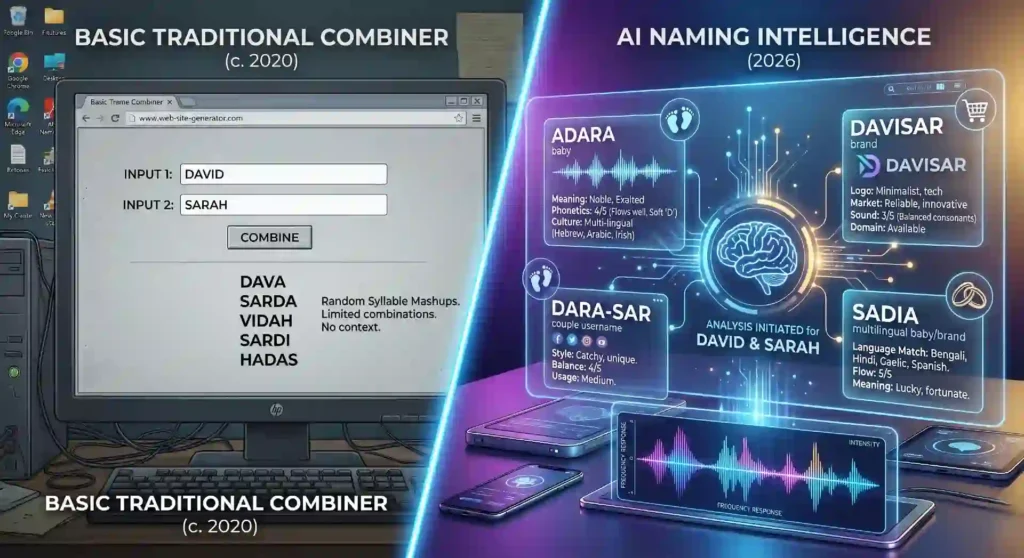
A few years ago, name combiners were simple – input two names, get a syllable mashup, done. In 2026, that’s no longer the standard. AI tools have completely transformed the name blending space.
The best AI naming tools now consider phonetic flow, cultural origin, syllable balance, brand personality, and even meaning. They don’t just combine letters. They think about how the name sounds, what it implies, and whether it’ll age well.
This guide covers the top 8 AI tools that create unique combined names in 2026 – what each one does best, who it’s for, and how to actually get good results from it.
How AI Has Changed Name Combining
Traditional name generators are essentially algorithms with fixed rules. They split names at common syllables and stitch them back together. Useful, but limited.
AI-powered tools are different. They evaluate each generated name against learned patterns – what real names sound like, what reads as natural in different languages, which combinations are likely to feel right to a native speaker. The result is name suggestions that sound intentional rather than randomly assembled.
A 2025 BabyCenter survey reported that 64% of expectant parents now prefer AI-driven naming tools over static generators. That number was 23% just two years earlier. The shift is real, and it’s accelerating.
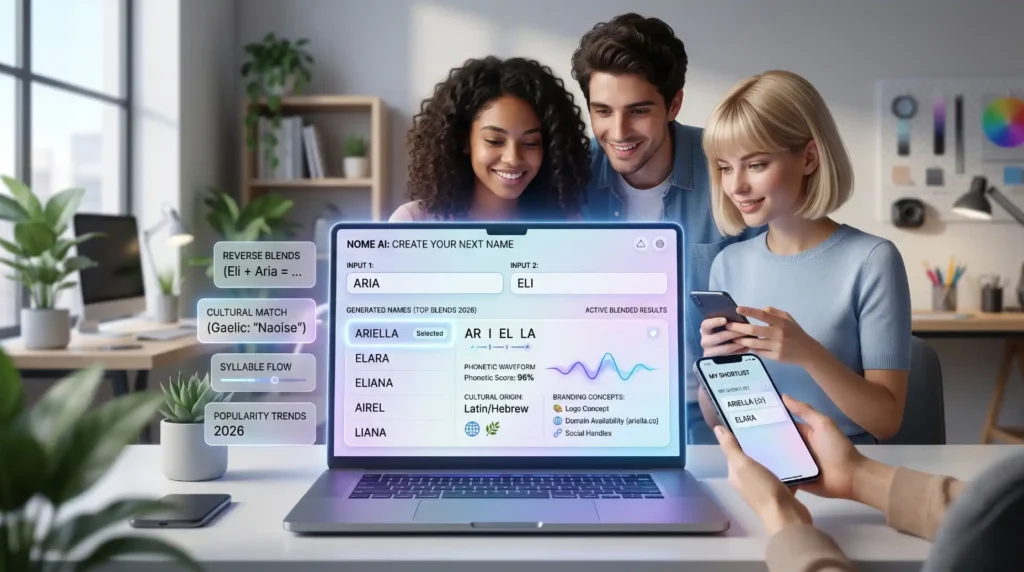
What Makes an AI Name Tool Worth Using
Before opening any tool, know what separates the good ones:
- Context awareness: Can you describe your needs, or does it just take two inputs?
- Meaning explanations: Does it tell you why each suggestion works?
- Iterative refinement: Can you say “shorter” or “softer” and get adjusted results?
- Cultural sensitivity: Does it understand naming traditions across cultures?
- Free tier availability: The best AI tools have a free way to get started.
Top 8 AI Tools That Create Unique Combined Names in 2026
1. Claude (Anthropic)
Claude is the most context-aware naming tool available in 2026. You can describe two names, the vibe you want, the cultural background, the gender preference, and Claude generates suggestions with full reasoning attached.
What sets it apart is the conversation. You can iterate: “Make it shorter.” “More feminine.” “Sound less like a brand, more like a real name.” Claude responds with thoughtful adjustments every time.
Best for: Anyone who wants a collaborative, intelligent naming experience.
Free at: claude.ai
2. Namelix
Namelix is an AI-powered brand name generator that doubles as a name combiner. Enter keywords or two names and it produces short, modern, brandable results – each one with a logo mockup attached. Especially powerful for content creators and influencers naming a joint account.
Best for: Brand-style combined names with built-in visual identity.
3. ChatGPT
ChatGPT is the most widely used AI naming tool in 2026. With the right prompt, it produces creative blended names across any category – baby names, couple names, pet names, brand names. The free tier is fully sufficient for most users.
A solid starter prompt: “Combine the names [A] and [B] into 15 unique, two-syllable names that sound modern and easy to pronounce. Explain the reasoning for each.”
Best for: General-purpose AI naming with massive flexibility.
4. Kinder Name Mixer
Kinder is a 2025 release that specialises in AI-generated baby names. It weights phonetic flow and syllable balance to produce results that genuinely feel name-like. The origin filter (Celtic, Scandinavian, Latin, East Asian) is one of the best in the category.
Best for: Expectant parents wanting culturally informed AI suggestions.
5. Mixname.io
Mixname.io is built specifically around AI-generated blended names for multicultural families. Give it two cultural origins and it produces names that honour both phonetic traditions – rather than forcing one to dominate.
Best for: Dual-heritage families wanting balanced fusion names.
6. Squadhelp AI
Squadhelp’s AI mode generates brand-style names based on industry, personality, and target audience. While it’s marketed toward businesses, it works just as well for couple brands, family content channels, or pet influencer accounts.
Best for: Branded combined names with commercial polish.
7. NameBlend (AI Edition)
NameBlend’s 2026 update added AI-driven phoneme analysis. You input two names plus a “sound style” preference (soft, strong, lyrical, sharp) and it returns options that match your aesthetic. The iOS app is particularly polished.
Best for: Aesthetic-focused naming where sound style matters.
8. Perplexity AI
Perplexity isn’t a dedicated naming tool, but its conversational AI handles name blending excellently – with one major advantage. It cites sources and references real naming trends, etymology, and usage data. This makes it ideal for research-driven naming decisions.
Best for: Parents who want their AI naming suggestions backed by real data.
Quick Comparison: Top 8 AI Name Combiners in 2026
| Tool | Best For | Free? | Standout Feature |
|---|---|---|---|
| Claude | Conversational, context-aware | Yes | Iterative refinement with reasoning |
| Namelix | Brand-style combined names | Yes | Logo previews with each suggestion |
| ChatGPT | General-purpose AI naming | Yes | Massive flexibility with good prompts |
| Kinder Name Mixer | Baby name AI blending | Yes | Cultural origin filtering |
| Mixname.io | Multicultural fusion | Yes | Balanced phonetic blending |
| Squadhelp AI | Brand-style results | Partial | Industry-tuned naming |
| NameBlend AI | Aesthetic sound style | Yes (iOS) | Sound style filter |
| Perplexity | Research-backed naming | Yes | Source-cited suggestions |
How to Get the Best Results from AI Name Tools
The single biggest factor in AI naming quality is your prompt. Vague inputs produce vague outputs.
Here’s a template that consistently works:
> “Combine the names [Name A] and [Name B] into 10 unique blended names. Each name should:
> – Be 2-3 syllables
> – End on a vowel sound
> – Feel modern but not invented
> – Work for a [baby / pet / brand / couple]
> Explain why each name works and any meaning it carries.”
Then iterate. Don’t accept the first batch as final. Ask for shorter versions, softer versions, more cultural variants. The best naming sessions are conversations, not single requests.
Common Mistakes When Using AI Name Tools
- Accepting the first result: AI tools shine on iteration. Push for 3-5 rounds before deciding.
- Skipping cultural verification: AI doesn’t always catch awkward meanings in other languages. Always ask a native speaker.
- Using vague prompts: “Combine these names” gives weak results. Specific prompts give specific outputs.
- Forgetting the auditory test: A name that looks great on screen can sound wrong out loud. Say every shortlisted name multiple times.
- Trusting one tool only: Each AI has its own naming bias. Use at least two before deciding.
Frequently Asked Questions
What is the best AI tool for combining names in 2026?
Claude (Anthropic) is the strongest overall for conversational, context-aware name blending. For brand-style results, Namelix leads. For massive flexibility, ChatGPT remains the most widely used. The right choice depends on what you’re naming.
Are AI name combiners free?
Most have a free tier. Claude, ChatGPT, Namelix, Mixname.io, and Perplexity all offer fully usable free versions. Squadhelp’s AI mode requires payment for advanced features. The free tiers are sufficient for almost every naming task.
Can AI invent original names that don’t exist yet?
Yes – and they do this exceptionally well. Tools like Namelix and Wordoid are specifically designed to generate invented names that sound natural. Claude and ChatGPT can also produce completely original blends when prompted for novelty.
How accurate is AI when it comes to name meanings?
AI tools are generally accurate but not perfect. Always cross-check meaning claims against a dedicated source like Behind the Name. AI is excellent at sound and structure but occasionally invents etymologies that don’t exist. Verify before committing.
Will AI replace traditional name generators?
It already has, for many users. Static name generators still have a place for quick inspiration, but AI tools handle nuance, context, and cultural sensitivity in ways static generators simply can’t match. The trend is clearly toward AI-led naming.
Related Reading on FieldBuzz
- Best 11 Free Apps to Combine Two Names for a Newborn (2026 Guide)
- Top 15 Tools to Combine Middle Names and Last Names
- Best 14 Gender-Neutral Name Combiners for Modern Parents