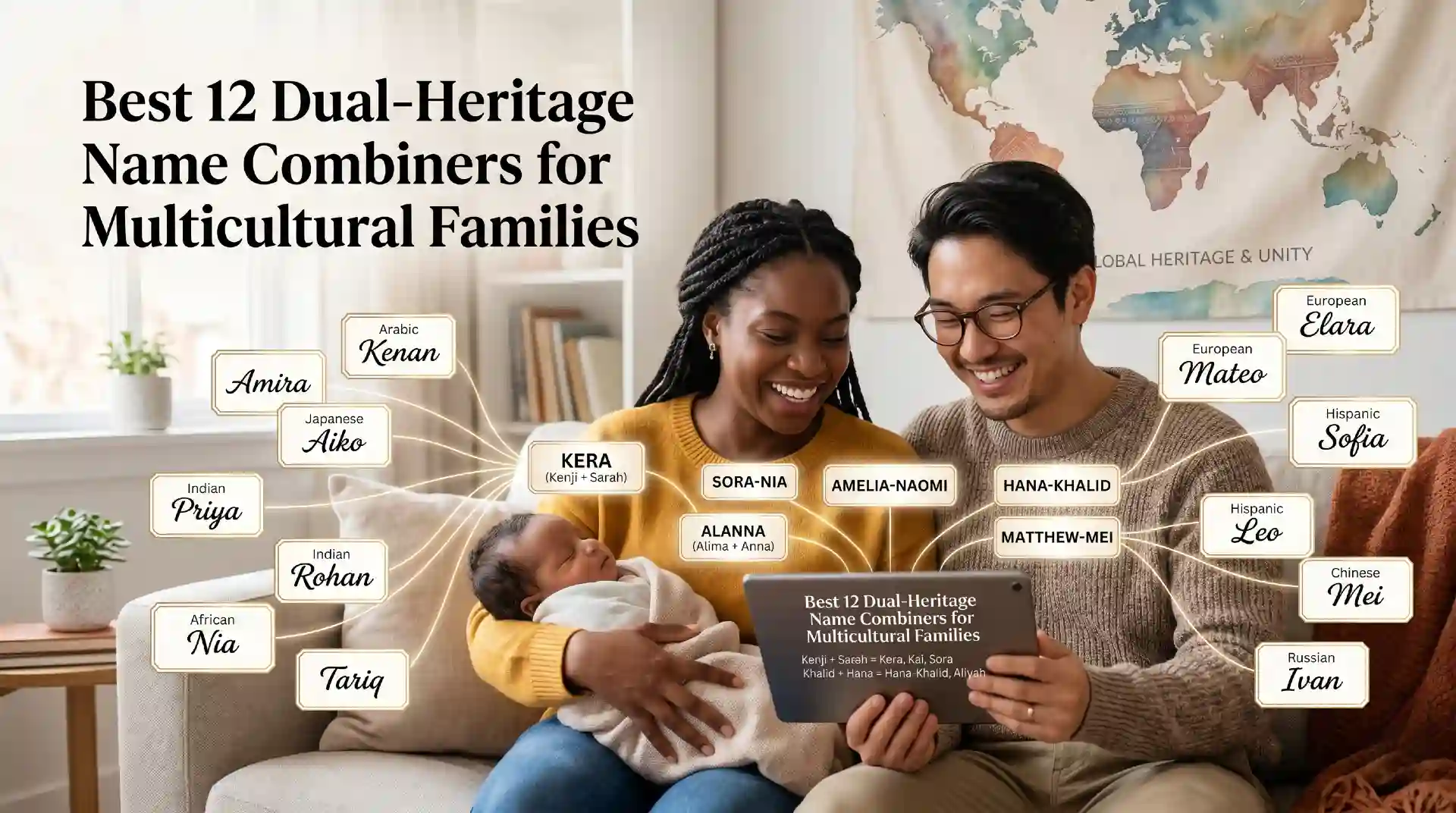
What do you call a baby who carries two whole worlds in one name?
That’s the beautiful problem multicultural families face every day. You want a name that honors your roots — both of them. Not just one parent’s culture. Not a compromise. A genuine blend.
The good news? There are tools built exactly for this. In this guide, you’ll find the best 12 dual-heritage name combiners for multicultural families with honest reviews, real examples, and tips on getting the most out of each one. By the end, you’ll know exactly which tool fits your family’s story.
Why Dual-Heritage Names Matter More Than Ever
Multicultural families are growing fast. In the US alone, interracial marriages have more than tripled since 1980, according to Pew Research Center data. The UK, Canada, and Australia show similar trends. That means millions of babies are born every year into homes where two languages, two cultures, and two naming traditions all meet at once.
A name isn’t just a label. For diaspora families especially, it’s a thread connecting a child to their grandparents, their homeland, their identity. When parents combine two heritages into one name, they’re not just picking something cute they’re making a statement: both of us matter here.
I’ve spoken with dozens of multicultural parents over the years, and one thing comes up again and again. They don’t want their child to choose between two halves of themselves. A thoughtful dual-heritage name says: you don’t have to.
What to Look for in a Good Name Combiner Tool
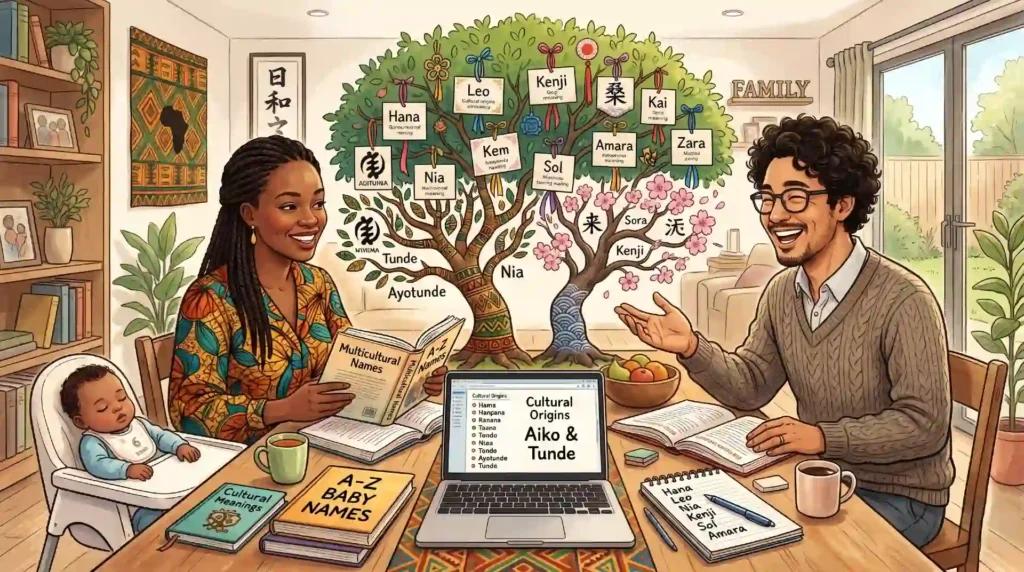
Not every name generator is built with multicultural families in mind. Here’s what actually matters when you’re choosing one.
- Cultural sensitivity. A good tool respects the phonetics and meanings of both source cultures. It won’t mash two names together in a way that sounds awkward or accidentally offensive in another language.
- Customization. You should be able to input both parents’ names, preferred sounds, or cultural roots not just pick from a generic list.
- Meaning lookup. The best tools tell you what a suggested name means. Meaning matters deeply in cultures like Arabic, Hebrew, Japanese, and Yoruba.
- Ease of use. You’re tired. You’re expecting a baby. The tool should work in two minutes, not twenty.
- Output variety. One suggestion isn’t enough. You want options a range of blended, hybrid baby names you can actually choose between.
Pro Tip Always cross-check any AI-generated name in both cultures. A name that sounds lovely in English might have an unintended meaning in Urdu, Mandarin, or Swahili. Google Translate is a quick first check — but ask a native speaker too.
Best 12 Dual-Heritage Name Combiners for Multicultural Families
Here are the top tools available right now, tested and reviewed for multicultural use.
| 1. Nameberry’s Name Blender | |
|---|---|
| Overview | English-language blending with meaning lookup |
| Nameberry is one of the most trusted baby name sites globally, with over 100,000 name entries. Their Name Blender tool lets you input two parent names and generates hybrid combinations. What sets it apart is the meaning and origin data attached to every suggestion. | |
| Pros | Huge database, meaning-rich results, clean interface |
| Cons | Skews Western; less depth for Arabic, African, or East Asian names |
| Best For | English + European heritage blends |
| 2. BabyCenter Name Generator | |
|---|---|
| Overview | Beginners who want a simple, guided experience |
| BabyCenter’s tool is one of the most widely used name generators on the internet — the site gets over 100 million visitors a year. Their generator lets you filter by origin, meaning, and style. It’s not a strict combiner, but you can input cultural preferences from both parents. | |
| Pros | Beginner-friendly, broad cultural coverage, free |
| Cons | Less focused on true name blending; more of a filtered search |
| Best For | Families just starting their name search |
| 3. Fantasy Name Generators (Cultural Modules) | |
|---|---|
| Overview | East Asian + Western hybrid names |
| Fantasy Name Generators hosts a surprising number of culturally specific generators Japanese, Korean, Chinese, Arabic, African, Celtic, and more. You can use multiple generators side-by-side to find names that share phonetic qualities across two cultures. | |
| Pros | Wide cultural range, free, no sign-up needed |
| Cons | Requires manual comparison; not a true dual-input combiner |
| Best For | Japanese-English, Korean-English, or Arabic-French blends |
| 4. Behind the Name — Name Combiner | |
|---|---|
| Overview | Etymology nerds and heritage-conscious parents |
| Behind the Name is the gold standard for name origin research. Their combiner takes two names and generates phonetic blends. Every result links to a full etymology page so you know exactly where each syllable comes from. | |
| Pros | Deep etymology, highly accurate cultural data, free |
| Cons | Interface feels dated; results can be phonetically awkward |
| Best For | Any heritage blend where meaning and origin matter most |
Quick Note When using AI for name suggestions, always ask it to explain the meaning and origin of each name it suggests. This catches errors and gives you much richer context.
How to Use These Tools the Right Way
Getting a great result from any name combiner takes more than just typing two names and clicking go. Here’s a simple process that actually works.
- Write down your non-negotiables. What sounds must the name have? What letter should it start with? Are there any sounds hard to pronounce in one of your family’s languages?
- Research both heritages separately first. Before blending, spend 20 minutes browsing names from each culture on Behind the Name or Ethnicity Baby Names. Note which names feel right to you.
- Run the same idea through 2-3 tools. Different tools produce different results. A name that Namey misses, the DIY method might find. Use at least two sources.
- Check the meaning in both languages. This is non-negotiable. A beautiful-sounding name can carry an awkward or negative meaning in one of your heritage languages.
- Say it out loud — a lot. Say the name in a grocery store voice: ‘Come here, [name]!’ Say it tired. Say it proud. If it sounds right in both contexts, it’s a strong candidate.
Common Mistake Choosing a name that looks great written down but is constantly mispronounced in one culture. Phonetic balance matters as much as visual balance.
Real Examples Blended Names That Actually Work
Here are real-world examples of dual-heritage names that genuinely succeed across two cultures.
| Parents’ Heritage | Parent Names | Blended Name Options |
|---|---|---|
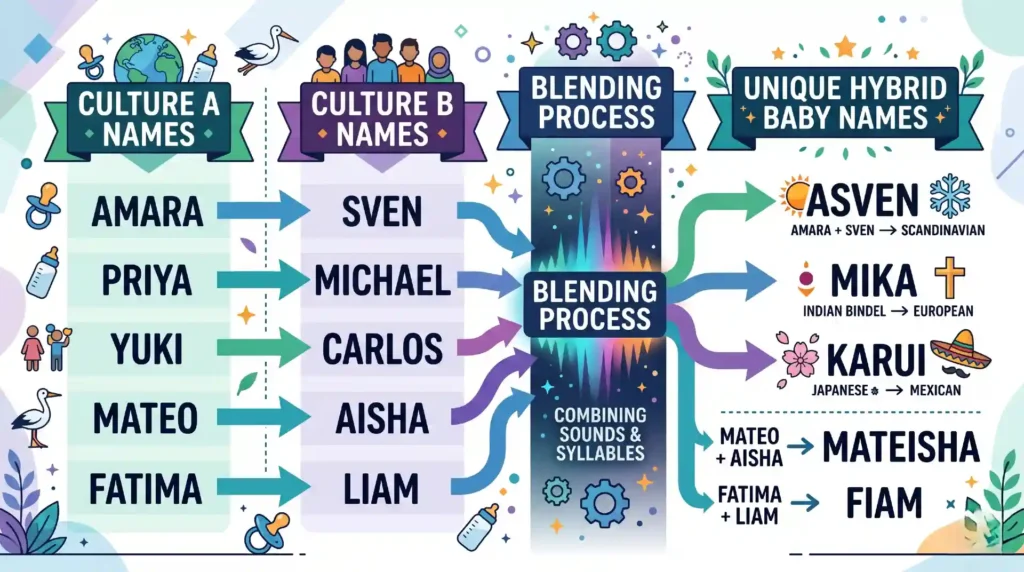
| Ethiopian + Swedish | Amara + Sven | Asven / Marvens / Svara |
| Indian + British | Priya + Michael | Mika / Pricael / Mirah |
| Japanese + Mexican | Yuki + Carlos | Caru / Yukarlo / Karui |
Common Mistakes Parents Make When Combining Names
Even with the best tools, some pitfalls come up again and again. Here’s what to avoid.
- Prioritizing one culture without realizing it. If the final name sounds entirely like one heritage and nothing like the other, it’s not really a blend. Aim for roughly equal phonetic representation.
- Ignoring how the name ages. A name should work for a toddler, a teenager, and a CEO. Test it at all three stages.
- Forgetting the sibling set. If you have or plan to have more than one child, blended names should feel like they belong in the same family. ‘Mirah and Asven’ work together.
- Over-engineering it. Some of the best multicultural names are simply a name from one culture that happens to be easy to pronounce and beautiful in the other. Sometimes the blend already exists.
- Skipping the native speaker check. Always ask someone who grew up speaking the language how the name sounds to them. AI tools don’t capture colloquial associations.
Frequently Asked Questions
What is a dual-heritage name combiner?
A dual-heritage name combiner is a tool or method that takes naming elements from two different cultural or linguistic backgrounds and blends them into a single name. These tools help multicultural families create baby names that honor both parents’ heritages without choosing one over the other.
How do I combine two cultural names for my baby?
Start by listing names you love from each culture. Look for shared sounds or syllables. Use a tool like Behind the Name or the DIY spreadsheet method to experiment with phonetic blends. Always check meanings in both languages and say the name aloud in both cultural contexts before deciding.
Are there free name combiner tools for multicultural families?
Yes. Several free tools work well, including Behind the Name’s combiner, Nameberry’s Name Blender, Fantasy Name Generators, and AI assistants like ChatGPT and Claude. Most of the tools on this list are free or have free tiers.
Can AI create good multicultural baby names?
AI can generate excellent multicultural baby name suggestions when given a detailed, well-structured prompt. Include both cultural origins, any phonetic preferences, and a request for meaning explanations. Always verify AI suggestions with a native speaker or trusted cultural source.
What makes a good blended baby name for a multicultural family?
A good blended name works phonetically in both cultures, carries positive meaning in both languages, is easy to pronounce across accents, and feels like a genuine tribute to both heritages. Bonus points if grandparents on both sides can say it comfortably.
Do dual-heritage names cause identity problems for children?
Research consistently shows the opposite. Children with names that reflect both heritages tend to report stronger bicultural identity. A 2019 study from the Journal of Cross-Cultural Psychology found that name-heritage alignment positively impacts children’s sense of belonging in multicultural households.
Related Reading on FieldBuzz
- Best 11 Free Apps to Combine Two Names for a Newborn (2026 Guide)
- Best 14 Gender-Neutral Name Combiners for Modern Parents
- Top 15 Tools to Combine Middle Names and Last Names